Pioneering soil biology solutions designed for industrial civil works, harbor environmental control, and high-yield sustainable agriculture in South Korea.
Addressing modern urban development, port soil stability, and agricultural sustainability through the lens of modern molecular soil microbiology.
Global Soil Microbiology Crisis and the Botanical Solution
Modern industrial agriculture and expanding urban infrastructure face a shared biological crisis: soil depletion, structural erosion, and the collapse of the rhizosphere microbiome. Decades of heavy chemical utilization have stripped soils of indigenous microbial populations—specifically plant growth-promoting rhizobacteria (PGPR), mycorrhizal fungi, and organic carbon compounds that bind mineral particles together.
Internationally, there is a paradigm shift toward regenerative soil science. Soil is no longer treated as an inert matrix for synthetic NPK application, but as a living ecosystem. By integrating plant-derived natural compounds, including structured tannins, gallic acid, and humic fractions, developers and agriculturalists can restore natural water retention, accelerate nutrient mineralization, and establish biological barriers against persistent soil pathogens.

Busan, as South Korea’s largest port city and second-largest metropolitan area, represents a complex intersection of coastal soil dynamics, mountainous terrain, and intensive regional agriculture. The surrounding Nakdong River Delta (especially agricultural regions like Gangseo-gu and Daejeo-dong) is famous for greenhouse vegetable production, which historically suffers from severe soil fatigue, high accumulation of salt from intensive chemical fertilization, and marine intrusion.
Concurrently, the port logistics expansion, industrial park developments, and maritime construction activities in Busan generate high volumes of fugitive dust and require massive stabilization of subgrade soils. Traditional cementitious stabilizers often raise localized soil pH to phytotoxic levels and damage surrounding aquatic systems. The integration of eco-friendly soil hardeners and biological stabilizers is vital to satisfy South Korea's strict environmental compliance frameworks while ensuring high mechanical performance.
How Hangzhou Sativa Plant Co., Ltd.'s botanical extraction expertise powers advanced soil amendments.
Integrating Plant-Based Active Molecules Into Soil Biology
For decades, Hangzhou Sativa Plant Co., Ltd. has established a global footprint under the development philosophy of "From Plants, Research for Health." By focusing on the deep extraction and processing of core botanical resources like gallnut (producing tannin and gallic acid), Siraitia grosvenorii, bitter orange (hesperidin), and Sophora japonica (rutin), we possess an intricate understanding of how plant secondary metabolites interact with living systems.
In soil science, plant-derived molecules play an essential, often overlooked role: they function as natural biocides, carbon inputs, and chelators. Tannins and gallic acid derivatives act as natural complexing agents that bind metals, improve cation exchange capacity, and act as prebiotics for beneficial microbes while selectively suppressing soil pathogens. Applying this expertise to agricultural and civil sectors in Busan enables us to deliver soil-stabilization, nutrient-release, and pathogen-control solutions that are entirely biological, safe, and highly efficient.
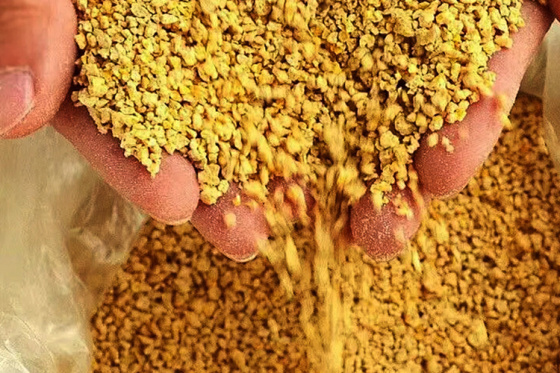
Real-world deployment patterns of our microbiology and soil engineering technologies.
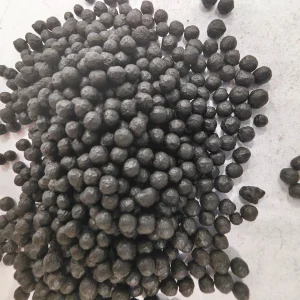
Marine aerosol intrusion and high salt index values in plastic greenhouses of Gangseo-gu lead to soil lockup. Our biological decomposers and humic acid products solubilize locked ions, improve cation exchange, and stimulate microbial buffering, restoring yield parameters by up to 25% without chemical residues.
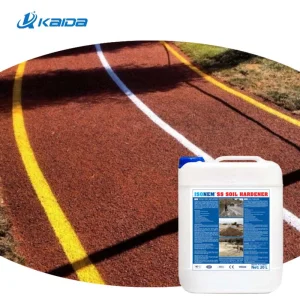
Heavy vehicle traffic on dynamic harbor storage grounds creates significant particulate matter pollution. Using the Ss Soil Hardener, operators can quickly stabilize native sandy soils, establishing a dust-suppressed surface layer capable of resisting mechanical shear, without harming surrounding marine waterways.
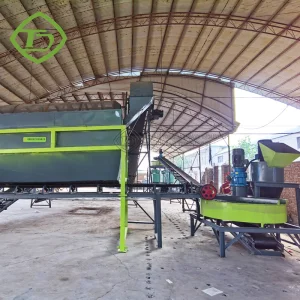
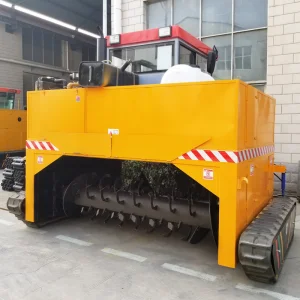
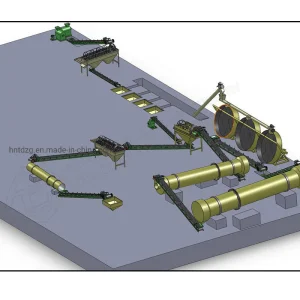
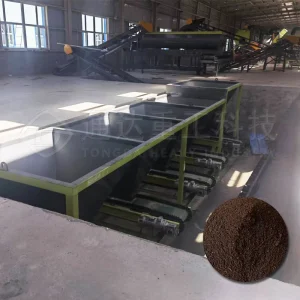
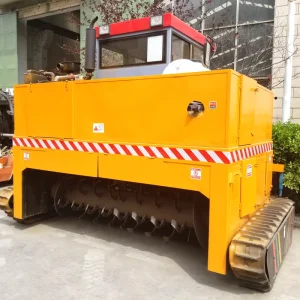
Through specialized aerobic composting turner equipment and compost production lines, municipal and industrial organic residues (food waste, chicken manure) are rapidly stabilized. Pathogenic organisms are eliminated at pasteurization temperatures, yielding high-grade compost registered with South Korea's RDA.
How our R&D roadmap aligns with South Korea's carbon neutrality target and ESG corporate values.
Our collaborative R&D pipeline between agricultural microbiologists and botanical chemists centers around three technological milestones:
Utilizing natural plant-derived polymers to coat active spores of Bacillus subtilis and Trichoderma harzianum. This process preserves microbial viability in harsh, saline-alkali environments typical of reclaimed soils in the Busan coastal areas.
Replacing petroleum-derived polyacrylamides (PAMs) with custom polymerized plant gallnut tannins to aggregate fine soils, preventing erosion on steep terraced orchard hillsides in Busan without inducing soil toxicity.
Integrating IoT soil sensory arrays with specific biological applications to real-time track organic matter decomposition and humic release rates, allowing growers to dose micronutrients dynamically.
Explore our full industrial line for organic soil treatment, pest control, and manufacturing equipment optimized for Busan buyers.
Clarifying biochemistry, soil stabilization mechanics, and importation compliance for Busan industrial buyers.
Traditional cement binders fixate soil by creating a brittle crystalline matrix, which alters soil chemistry, raises pH, and is prone to micro-cracking. Our Ss Soil Hardener uses a cross-linking copolymer emulsion that coats soil aggregates with an elastic, water-resistant film. This binds fine particles together to prevent dust and erosion while maintaining a degree of soil flexibility and keeping the surrounding ecosystem chemical-free.
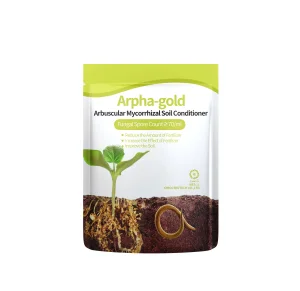
Coastal soils around Busan contain high salt concentrations, which induce osmotic stress in seedlings and lock up phosphorus. Mycorrhizal inoculants (such as ARPHA GOLD) establish a symbiotic fungal network that increases root surface area by up to 1000%. This fungal network filters toxic sodium ions while selectively importing phosphorus and water, ensuring much higher survival rates for seedlings in coastal soil restoration.
Yes. Our raw plant extractions and formulated compounds comply with international standards. We maintain ISO9001, ISO14001, and ISO22000 management certifications. Furthermore, for importing into South Korea, our products are aligned with national chemical control acts (K-REACH) and Rural Development Administration (RDA) standards for organic input classification, ensuring smooth clearance through the Port of Busan.
Our aerobic fermentation machinery uses thermophilic microbes to convert municipal and agricultural organic waste (such as food waste or chicken manure) into stable, odor-free, organic compost in 7 to 15 days. The process generates internal temperatures above 55°C, effectively destroying weed seeds, insect larvae, and pathogens, converting a waste stream into valuable agronomic fertilizer.
 Sativa Plant