Premium solutions catering to organic fertilization, structural aeration, and smart cultivation




A comprehensive look at the macroeconomic drivers, regulatory pushes, and market valuations.
The global transition towards sustainable agriculture is no longer a niche ecological preference; it is a macroeconomic imperative. Decades of intensive chemical cultivation, heavy tillage, and synthetic mineral applications have depleted the Earth’s topsoil, driving a structural drop in crop resilience, nutrient density, and soil microbiome activity. According to the United Nations Convention to Combat Desertification (UNCCD), up to 40% of the world’s land is currently degraded, directly impacting global food security and economic stability. In response, governments and agricultural syndicates are steering massive capital investments toward the Compost & Soil Health Sector.
The global commercial soil amendments market—encompassing compost, humic substances, bio-stimulants, and organic carbon inputs—is valued at over USD 12 billion and is projected to expand at a Compound Annual Growth Rate (CAGR) of 9.5%. Industrial-scale composting complexes, bio-refineries, and specialized botanical extraction factories are emerging as the foundational infrastructure of this new agricultural era. These factories process millions of tons of organic municipal, agricultural, and industrial waste into standardized, pathogen-free organic substrates, driving circular bio-economies across North America, the European Union, and Asia-Pacific.
Furthermore, under strict ESG (Environmental, Social, and Governance) frameworks and carbon-credit programs, agricultural exporters are leveraging organic soil amendments as verifiable mechanisms for carbon sequestration. Improving soil organic matter (SOM) by a mere 1% can increase water retention capacity by up to 20,000 gallons per acre, providing a critical buffer against extreme weather events and drought. Consequently, the role of exporters has shifted from supplying commodity bulk fertilizers to delivering highly specialized, biologically active, and standardized soil conditioners capable of restoring depleted microbial ecosystems on a macro scale.
Discover the science behind molecular soil enrichment and advanced biostimulant technologies.
Natural hydrolyzable and condensed tannins regulate nitrogen pathways in the soil. They slow down the bacterial conversion of ammonium into nitrate, dramatically reducing nitrogen leaching into water systems and decreasing nitrous oxide (N₂O) emissions.
Integrating organic polyphenols, gallic acid, and humic materials helps construct stable soil aggregate structures. This process protects the clay-humus complex from structural degradation, ensuring long-term carbon sequestration and improved cation-exchange capacity (CEC).
Naturally derived bio-flavonoids like rutin and hesperidin serve as primary chemotactic signals for mycorrhizal fungi and beneficial plant-growth-promoting rhizobacteria (PGPR), establishing symbiotic root colonization.
In modern industrial agriculture, soil health is analyzed at the molecular level. Standard biological compost is now frequently fortified with precise concentrations of plant-derived phytochemicals. For instance, Hangzhou Sativa Plant Co., Ltd. has established itself as an innovative developer of natural plant-based raw materials, offering high-purity extraction of tannins, gallic acid, propyl gallate, rutin, hesperidin, and curcumin. While historically designated for food, feed, and pharmaceutical applications, these natural compounds are increasingly utilized by global soil health factories as biological catalysts.
The biochemical synthesis of organic soil conditioners requires precise enzymatic regulation. Hydrolyzable tannins, for example, interact with soil proteins to slow down the mineralization of organic nitrogen, making it available to crop roots over a longer vegetative cycle. This biochemical synchronization mitigates the "flush" effect of synthetic fertilizers, which often causes systemic plant weakness and invites pest attacks. By utilizing natural extracts, factories can customize compost formulations to mimic mature forest floor ecosystems, optimizing both yield and defense dynamics.
Navigating the transition toward smart, regenerative soil management systems.
Integrating agricultural municipal waste with standardized plant-derived bio-stimulants. Factories shift production lines to generate tailored composts containing specific profiles of polyphenols, ensuring uniform biological activity and thermal stability during global transport.
Utilizing biodegradable, natural materials to encapsulate plant extracts, plant growth regulators like 1-Naphthylacetic Acid (NAA), and biological microbial inoculants. This ensures target-specific release in response to moisture and pH variations in the rhizosphere.
Integrating soil-embedded micro-sensors with automated fertilization systems. Soil health factories will provide smart, liquid compost concentrates and organic carbon solutions calibrated dynamically by machine-learning models analyzing real-time microbial respiration and mineral levels.
Translating natural plant chemistry into sustainable global solutions since inception.
Since its establishment, Hangzhou Sativa Plant Co., Ltd. has adhered to the development philosophy of “From Plants, Research for Health.” Rooted in the field of natural plant extraction, the company focuses on the intensive processing and deep development of plant-based raw materials. With gallnut, Siraitia grosvenorii (monk fruit), turmeric, bitter orange, and Sophora japonica as its core resources, the company has established a stable supply chain and advanced production technology to transform natural plant materials into high-value functional ingredients.
The company’s main products include tannin, gallic acid, propyl gallate, mogroside (siraitin), curcumin, hesperidin, rutin, and other plant-derived compounds. These products are widely used in many industries such as pharmaceuticals, food and beverages, animal feed, textile processing, printing and dyeing, metallurgy, new materials, aerospace, and microelectronics. With reliable quality and competitive supply capability, the products are exported in large quantities to the United States, the European Union, Japan, Southeast Asia, and other international markets.

Guided by innovation and quality, Hangzhou Sativa Plant Co., Ltd. continuously strengthens its research and development capabilities, production technology, and quality management systems. The company integrates modern extraction technology, purification processes, and strict quality control standards to ensure that every product meets international requirements and customer expectations.
With advanced technical strength, stable production capacity, and consistent product quality, the company provides reliable functional ingredient solutions for industries such as food, pharmaceuticals, animal nutrition, and electronic materials. Through long-term cooperation with global partners, the company is committed to delivering efficient, safe, and sustainable plant-based solutions to customers worldwide.
Translating theoretical biotechnology into high-yield localized agricultural practices.
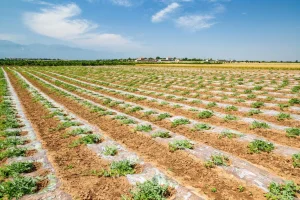
In the sandy, low-CEC soils of the US Southwest, industrial growers apply organic composts enriched with hydrolyzable gallotannins. The tannic compound forms stable complexes with soil macronutrients, restricting nitrogen evaporation and ensuring constant moisture retention around crop roots, leading to a 15% water saving.
Mediterranean vineyards frequently combat high soil acidity and aluminum toxicity. Cultivation protocols integrate Sophora japonica derived flavonoid complexes (Rutin) with humic substances. This system neutralizes ionic aluminum, mitigates phytotoxicity, and enhances root-zone nutrient uptake.
Coastal and heavily farmed zones in APAC utilize specialized compost combined with agricultural-grade phytogenic extracts. The high concentration of phenolic hydroxyl groups in the extracts acts as a natural chelator, immobilizing heavy metals (Pb, Cd) and reducing sodium uptake in intensive greenhouse vegetable crops.
A unified blueprint for government bodies, large agricultural cooperatives, and commercial estates.
Addressing soil degradation at scale requires a transition from symptomatic treatment to systemic rehabilitation. Large-scale farming networks face the dual pressure of maximizing seasonal yields while conserving soil assets. Our holistic soil management methodology integrates advanced biological inputs, precision equipment, and real-time monitoring to build a circular agricultural loop.
Expert insights answering key industry questions regarding biological soil management.
High-efficiency components supporting automated agricultural and horticultural setups






 Sativa Plant