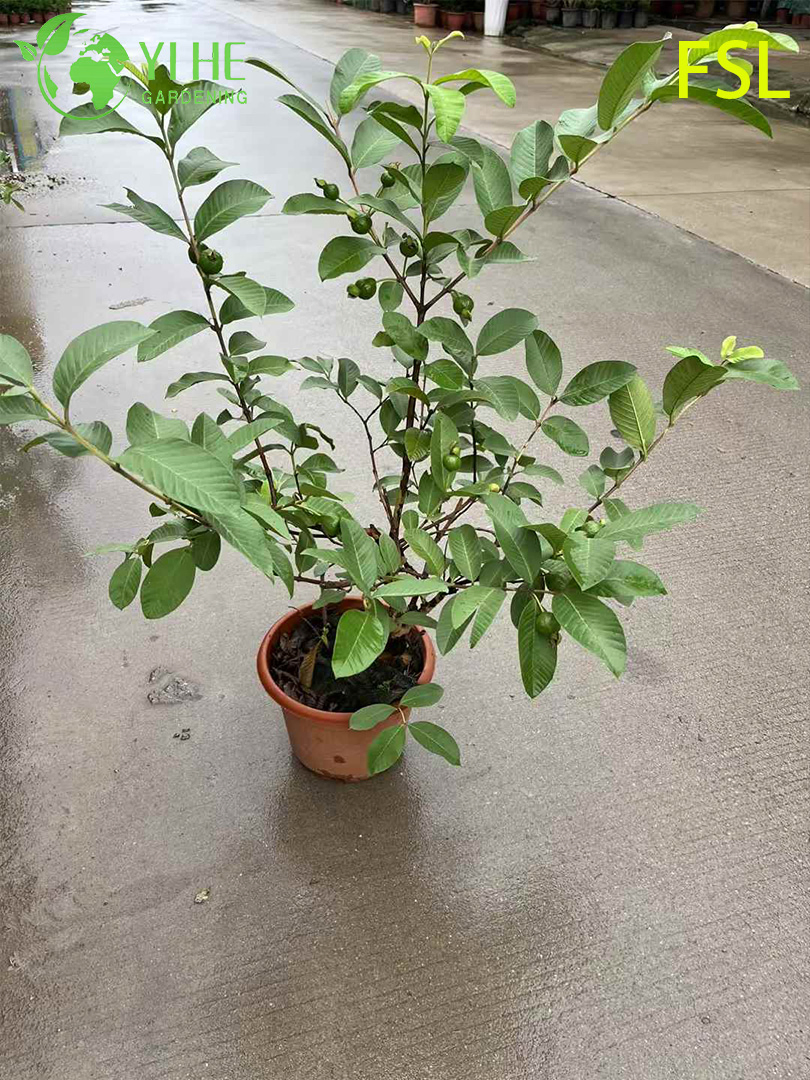
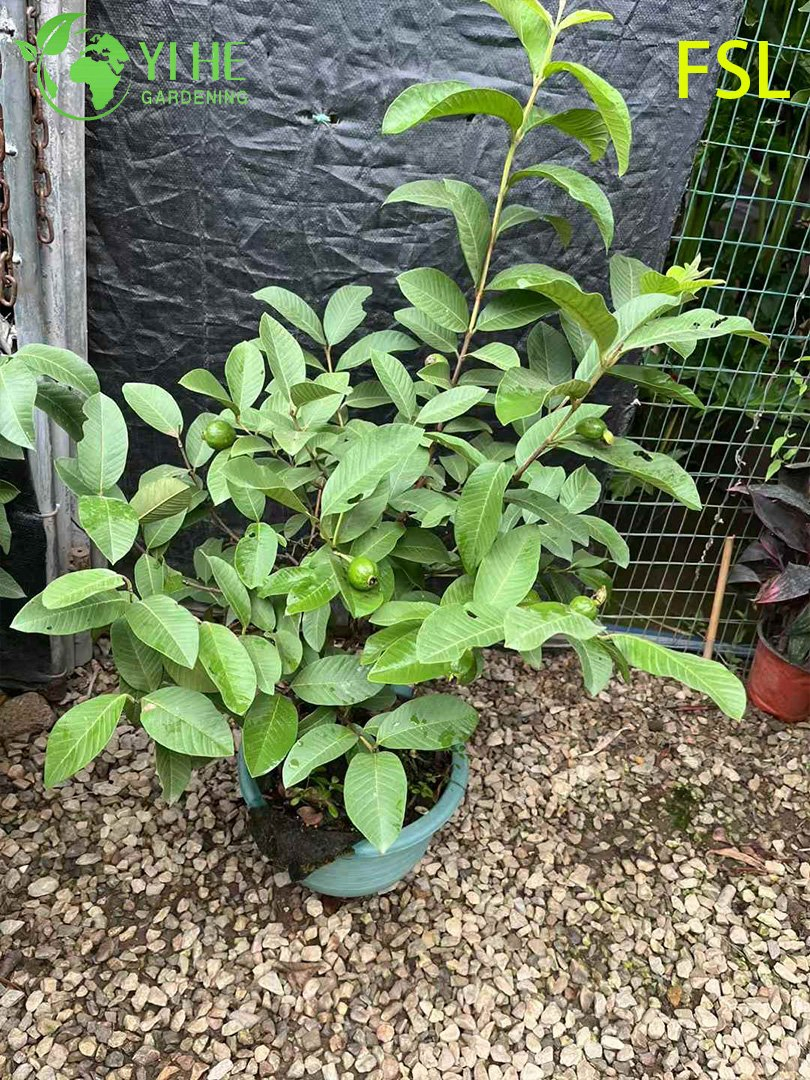
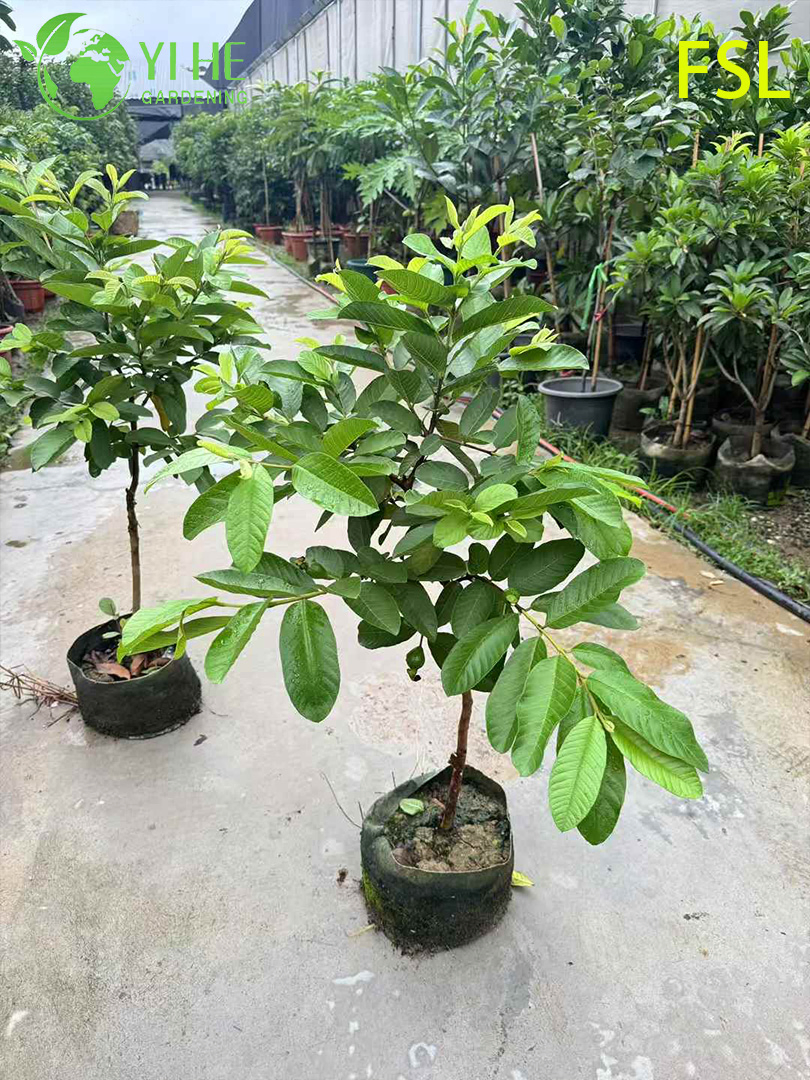
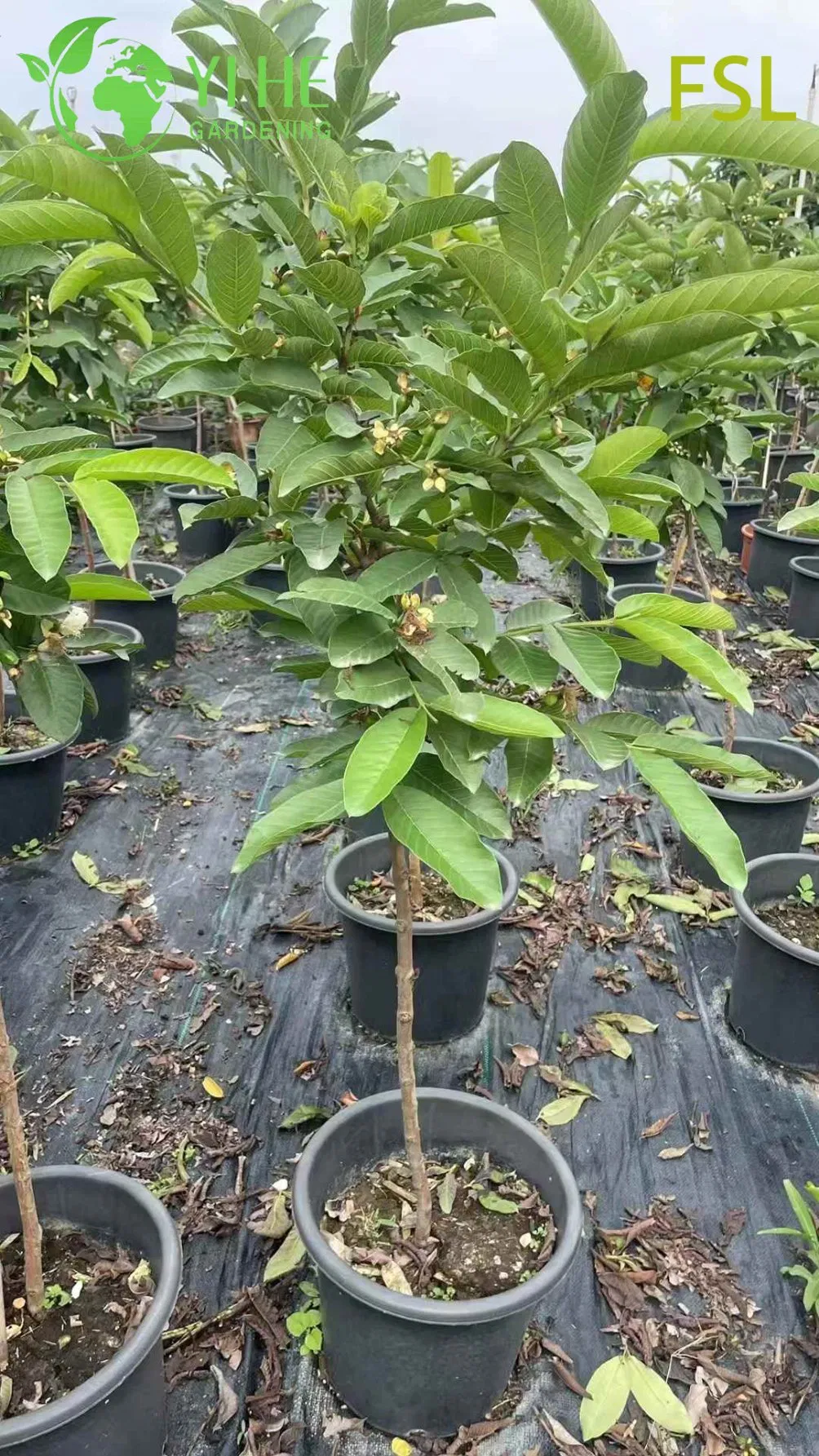
Fresh Tropical Psidium Guajava Live Fruit Trees for Export

Age: Young (1-3 years)
Feature: Heliophilous
Function: Edible Fruit Bearing

Product Description

Overview & Basic Info
Model NO.
Bonsai
Indoor/Outdoor
Indoor/Outdoor
Light Requirement
Full Sun
Pot Material
Plastic
Properties
Nature
Size
Small (under 10 inches)
Species
Guava
Style
Natural Form
Watering Frequency
Weekly
Specification
50cm— 200cm
Origin
China
Production Capacity
50000
Product Description
Fresh Tropical Psidium Guajava Live Fruit Trees

1. Origin and Historical Background

Native to the tropical regions of the Americas, likely from Mexico or Central America, Psidium guajava has been cultivated for centuries. Esteemed by ancient civilizations like the Aztecs and Incas, its journey across the globe began with European explorers in the 16th century. Today, it is a treasured fruit tree cultivated in tropical and subtropical regions worldwide, celebrated for its delicious taste and remarkable adaptability.

2. Health and Environmental Benefits

The guava is a nutritional powerhouse. The fruit is exceptionally rich in Vitamin C, antioxidants, potassium, and dietary fiber, supporting immune function and digestive health. The leaves are traditionally used for managing blood sugar levels and promoting cardiovascular health. Environmentally, these hardy trees help in preventing soil erosion and contribute to local biodiversity.

3. Comprehensive Care Guide

  • Light: Thrives in full sun. Requires at least 6-8 hours of direct sunlight daily for best growth and fruit production.
  • Watering: Water regularly, especially during the first 1-2 years. A weekly watering schedule is generally sufficient.
  • Soil: Adaptable to a wide range of soils but prefers well-draining soil with a pH between 5 and 7.
  • Fertilizer: Apply a balanced fertilizer regularly during the growing season to encourage fruiting.
  • Pruning: Prune annually after harvest to maintain size and encourage airflow and light penetration.

4. Versatile Applications

  • Food Industry: Staple for juices, smoothies, jams, sauces, and pastries.
  • Pharmaceutical & Wellness: Leaves and bark used for anti-diarrheal and anti-inflammatory properties.
  • Ornamental Landscaping: Beautiful addition to gardens with fragrant flowers and interesting bark.
  • Agroforestry: Can be intercropped for sustainable agricultural systems.

5. Additional Features and Advantages

Our guava trees are selected for fast-growing traits and can begin bearing fruit within 2-4 years of planting. They exhibit a natural resistance to many common pests and diseases, reducing the need for chemical interventions and lowering maintenance costs. Their adaptability makes them a reliable and profitable choice.


Frequently Asked Questions
How long does it take for the guava tree to produce fruit?
Our selected guava trees are fast-growing and typically begin bearing fruit within 2 to 4 years after planting.
What are the sunlight requirements for Psidium guajava?
The trees thrive in full sun and require at least 6 to 8 hours of direct sunlight daily for optimal growth.
Is the guava tree drought-tolerant?
Yes, once established, guava trees are quite drought-tolerant, though consistent weekly watering ensures a higher fruit yield.
What type of soil is best for planting?
While adaptable to various soils, they prefer well-draining soil with a pH level between 5 and 7.
Are these trees resistant to pests?
Yes, these trees exhibit a strong natural resistance to many common pests and diseases, minimizing maintenance efforts.
Can the leaves be used for anything?
Absolutely. Guava leaves are often used to brew medicinal teas known for managing blood sugar and supporting heart health.

Related Products