Featured smart technologies optimized for Maldivian eco-resorts and commercial island greenfarming.
Overcoming ecological constraints through automation, closed-loop hydroponics, and localized tech integration.
The Republic of Maldives faces distinct agricultural challenges. Consisting of over 1,192 low-lying coral islands scattered across the Indian Ocean, the region lacks vast arable soil resources. The native soil is highly alkaline, calcareous, and sandy, with minimal organic matter retention capability. High wind exposure and marine aerosol sprays introduce severe salt stress to conventional crop cultivation.
Furthermore, freshwater resources are severely limited. Traditional agriculture relies on thin freshwater lenses sitting atop saline groundwater aquifers, which are highly susceptible to over-extraction and climate-induced saltwater intrusion. Consequently, the Maldives imports over 90% of its fresh produce, which leads to high operational costs for luxury resort groups and creates vulnerabilities in local food security.
Our Mission: As leading smart agriculture technology suppliers, we design, export, and support integrated agrotech systems tailored to the hyper-saline, humid, and resource-constrained environments of Maldivian resort islands and local agricultural atolls like Thoddoo and Kaashidhoo.
Empirical field results demonstrating resource conservation and yield improvements across tropical closed-loop systems.
Combining automated hardware with botanical sciences to build resilient food production networks.
Modern commercial agriculture is shifting toward Controlled Environment Agriculture (CEA). This evolution is not limited to hardware automation. Rather, it focuses on integrating physical climate controllers with botanical inputs to support natural plant immunity and increase crop yields.
Our parent capabilities in plant extraction—spanning high-purity compounds like tannins, gallic acid, rutin, curcumin, and hesperidin—provide a unique technical advantage. When formulated as organic bio-stimulants, these natural extracts act as metabolic activators and antioxidants. They help crops tolerate saline conditions, extreme heat, and high humidity in Maldivian greenhouses.
By dosing closed-loop hydroponic systems with natural tannins and flavonoids, growers can stimulate root development and trigger systemic acquired resistance (SAR). This reduces reliance on synthetic chemical pesticides, aligning with the sustainability mandates of luxury Maldivian eco-resorts.
Our core capabilities designed to meet the high standards of global agricultural markets.
We process raw botanicals into high-value functional compounds like tannin, gallic acid, propyl gallate, mogroside, and rutin, serving agricultural and food industries worldwide.
Fully compliant with international quality management controls including ISO9001, ISO14001, ISO22000, ISO45001, and ISO56005, alongside HACCP, FAMI-QS, HALAL, and KOSHER registrations.
Recognized as an Authorized Economic Operator (AEO). This status ensures priority customs clearance, faster document verification, and a reliable global logistics pipeline directly to Male and outer atolls.
Bridging natural extraction and smart industrial tech to deliver sustainable raw materials and agricultural systems globally.
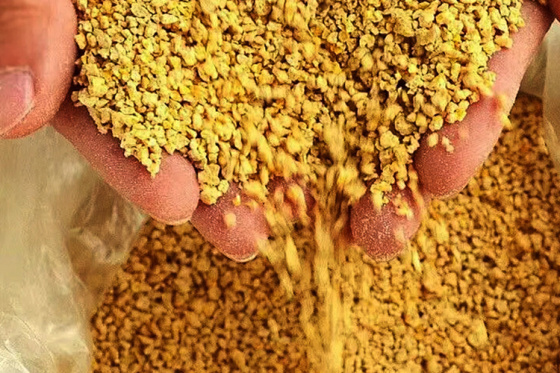
Since its establishment, Hangzhou Sativa Plant Co., Ltd. has adhered to the development philosophy of “From Plants, Research for Health.” Rooted in the field of natural plant extraction, the company focuses on the intensive processing and deep development of plant-based raw materials. With gallnut, Siraitia grosvenorii (monk fruit), turmeric, bitter orange, and Sophora japonica as its core resources, the company has established a stable supply chain and advanced production technology to transform natural plant materials into high-value functional ingredients.
The company’s main products include tannin, gallic acid, propyl gallate, mogroside (siraitin), curcumin, hesperidin, rutin, and other plant-derived compounds. These products are widely used in many industries such as pharmaceuticals, food and beverages, animal feed, textile processing, printing and dyeing, metallurgy, new materials, aerospace, and microelectronics. With reliable quality and competitive supply capability, the products are exported in large quantities to the United States, the European Union, Japan, Southeast Asia, and other international markets.
Guided by innovation and quality, Hangzhou Sativa Plant Co., Ltd. continuously strengthens its research and development capabilities, production technology, and quality management systems. The company integrates modern extraction technology, purification processes, and strict quality control standards to ensure that every product meets international requirements and customer expectations.
With advanced technical strength, stable production capacity, and consistent product quality, the company provides reliable functional ingredient solutions for industries such as food, pharmaceuticals, animal nutrition, and electronic materials. Through long-term cooperation with global partners, the company is committed to delivering efficient, safe, and sustainable plant-based solutions to customers worldwide.
Looking toward the future, Hangzhou Sativa Plant Co., Ltd. will continue to uphold its philosophy of innovation, sustainability, and health-oriented development, further expanding its plant extraction technologies and product applications. By combining natural resources with modern science, the company aims to create greater value for customers and contribute to the global development of natural, healthy, and sustainable industries.
Tailored agrotech systems designed for specific real-world settings across the archipelago.
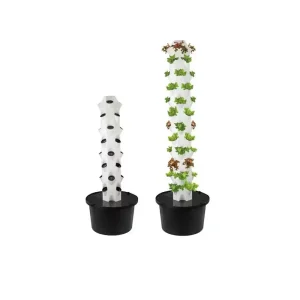
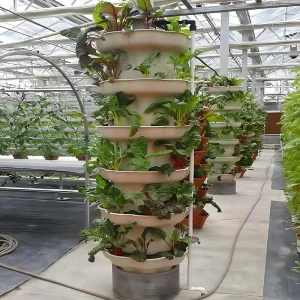
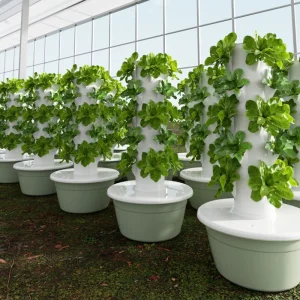
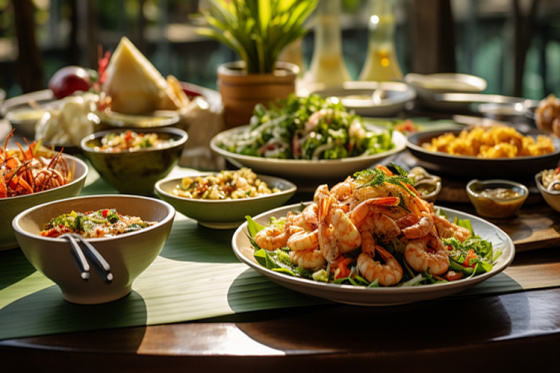
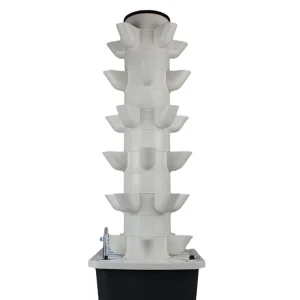
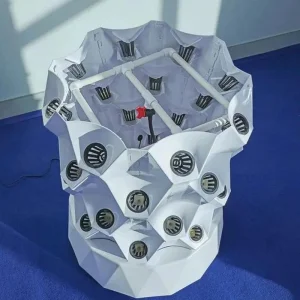
Luxury eco-resorts in the Baa, Ari, and North Male Atolls can integrate vertical aeroponic and hydroponic towers to produce high-value leafy greens, culinary herbs, and microgreens. Located adjacent to resort kitchens, these automated systems provide guests with fresh, hyper-local produce, reducing import logistics costs and carbon emissions.
Hulhumalé’s planned urban expansions feature limited green space. Our compact vertical farming systems and accurate temperature/humidity sensors enable automated multi-layer farms. These setups produce high-yield crops within small urban footprints to supply local markets in the Greater Male area.
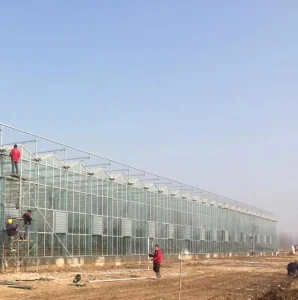
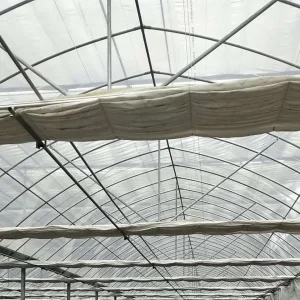
Agricultural islands like Thoddoo can utilize our multi-span sawtooth polycarbonate greenhouses. These structures are built to withstand high winds and salt air while protecting crops from torrential monsoon downpours, offering a stable environment for melon, cucumber, and chili production.
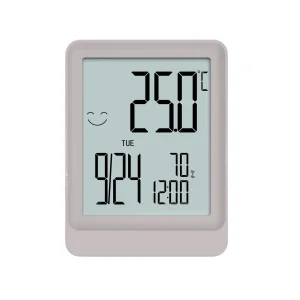
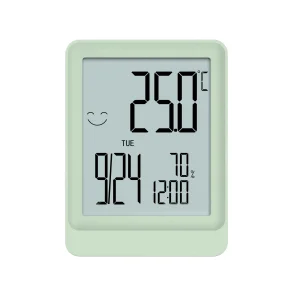
Integrating indoor/outdoor smart temperature and humidity sensors helps growers monitor micro-climates. Real-time data alerting prevents high-temperature stress in tropical environments, protecting crops and optimizing yields.
Browse our complete catalog of structural systems, vertical towers, and environment monitoring equipment.
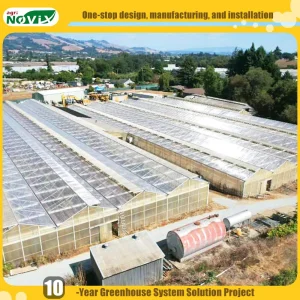
Greenhouse construction in coastal areas requires high corrosion resistance. Standard steel and low-grade plastics degrade quickly under marine salt spray. Our greenhouses feature hot-dip galvanized steel frames with a zinc coating thickness exceeding 275 g/m² (conforming to EN ISO 1461 standards). Structural joints and fasteners are made of marine-grade 316 stainless steel to prevent rust and structural failure during tropical storms.
For cladding, we use multi-wall polycarbonate sheets with double-sided UV co-extrusion layers. This design prevents yellowing and degradation from high UV levels in the Maldives, maintaining light transmission properties for over 10 years.
In closed-loop hydroponic systems, maintaining correct nutrient solution parameters is vital. High ambient air temperatures raise the water temperature inside nutrient reservoirs. If temperatures exceed 28°C, dissolved oxygen levels fall, increasing the risk of Pythium root rot.
Our smart automated tower systems feature inline micro-chillers and oxygenation units to keep nutrient solutions at a stable 20-22°C. Automated fertigation manifolds monitor pH, Electrical Conductivity (EC), and liquid temperature, dosing concentrated nutrients and organic bio-stimulants via smart dosing pumps to optimize plant uptake.
Delivering heavy greenhouse infrastructure and delicate electronic sensors to remote atolls requires specialized logistics. As an AEO Advanced Certified Enterprise, we provide streamlined shipping services from Hangzhou directly to the Port of Malé.
We pack all components in moisture-barrier wood crates to protect electronics from high humidity during maritime transit. Our logistics team coordinates custom clearances and handles local transshipment, coordinating with Maldivian dhoni and cargo vessels to ensure safe, on-time delivery to your resort or agricultural island.
Answers to common questions about setting up and running agricultural systems in tropical island environments.
Partner with an AEO-certified supplier to deploy efficient, high-performance agricultural tech tailored to the Maldives.
 Sativa Plant