Is tap water safe for sensitive tropical plants? The answer depends on chemistry, not simply whether water is drinkable. Municipal water must meet human-health standards, yet those standards do not guarantee ideal conditions for roots, leaves, or beneficial soil microbes. The U.S. Environmental Protection Agency’s 2024 National Primary Drinking Water Regulations permits disinfectant residuals, while its Secondary Drinking Water Standards list total dissolved solids at 500 mg/L as a taste-related guideline. Plants may respond differently. Sensitive Calathea, Maranta, Dracaena, and carnivorous species can show brown tips when salts, fluoride, or chlorine accumulate.
Small details matter.
The World Health Organization’s Guidelines for Drinking-water Quality explains that water composition varies by source, treatment, and distribution systems. Your utility’s annual Consumer Confidence Report can reveal disinfectants, hardness, fluoride, and reported contaminants. Check it before changing your watering routine. Horticultural extension guidance commonly recommends filtered, rain, or distilled water for fluoride-sensitive plants, especially when leaf edges repeatedly scorch. However, rainwater is not automatically pure. Roof dust, metals, and storage containers can introduce new problems. I have seen growers blame tap water when compacted soil, dry air, or fertilizer buildup caused the damage. That mistake is easy to make.
This guide presents seven practical checks. You will learn how to read a water report, identify mineral stress, test runoff, and choose safer alternatives. No single method suits every home. Start with evidence, observe fresh leaves, and adjust slowly. Your plant’s response is useful data, even when the diagnosis remains imperfect.
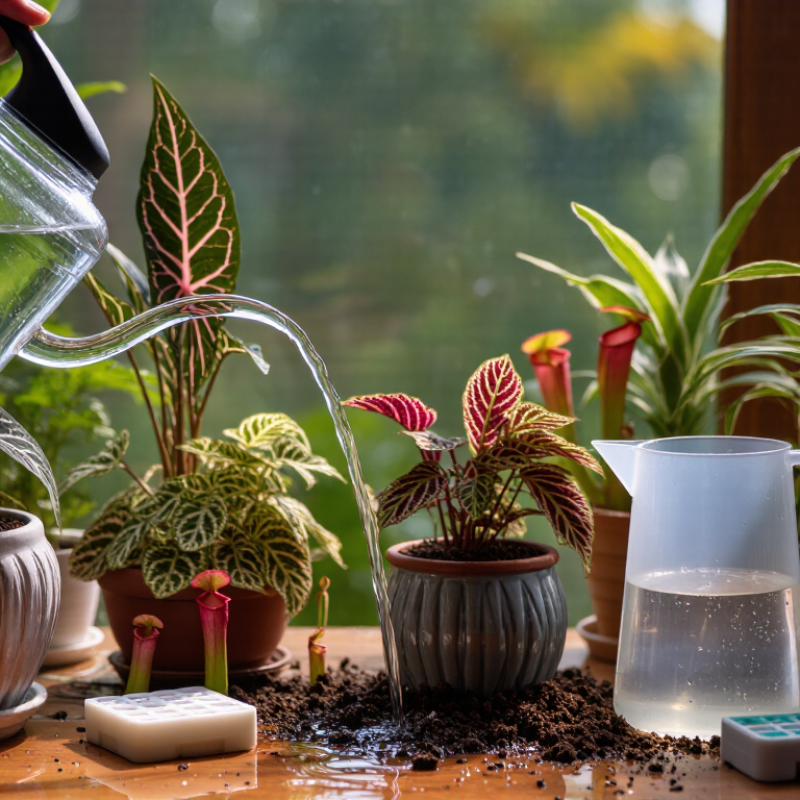
Tap water can be safe for many tropical plants, but chemistry matters. The U.S. Environmental Protection Agency sets a maximum residual disinfectant level of 4.0 mg/L for chlorine and chloramine, measured as chlorine. This protects drinking water users, not necessarily delicate roots. EPA Consumer Confidence Reports can reveal your local disinfectant, hardness, and seasonal changes. The U.S. Geological Survey also reports that dissolved minerals and alkalinity vary widely between water supplies.
1. Check your annual water report.
2. Test electrical conductivity when leaf tips turn brown.
3. Let chlorine-treated water stand overnight; this does not reliably remove chloramine.
4. Use activated carbon designed for chloramine when appropriate.
5. Avoid sudden water changes.
6. Flush the pot occasionally if mineral salts accumulate.
7. Keep water near room temperature.
Small details matter.
I have seen plants decline beside a bright window, then recover after gentler irrigation. Light was part of the problem. Water was not innocent, either. Chlorine and chloramine are only two variables; sodium, bicarbonate, and hardness can stress roots more quietly.
University extension guidance commonly recommends matching water quality to plant sensitivity, rather than trusting a single “safe” label. Rainwater or reverse-osmosis water may help, but plants still need balanced minerals. My own practice remains imperfect: I test, observe new growth, and adjust slowly. Old leaves can mislead.
Tap water is not automatically safe for sensitive tropical plants. In my indoor growing experience, plant damage often appears as brown tips, pale leaves, or crusty soil. These signs can come from excessive salts, unsuitable pH, or high alkalinity. Test the water before changing your watering routine. A local water report can provide useful background, but home testing shows what reaches your plants.
Tips: Check pH with a calibrated meter or fresh strips. Many tropical plants prefer slightly acidic water, often near pH 5.5 to 6.5, but species differ. Measure EC to estimate dissolved salts. High EC may stress roots, especially in small pots.
TDS also measures dissolved material, although its reading depends on the meter’s conversion scale. Record the scale and compare readings consistently. Test alkalinity, because bicarbonates can slowly push soil pH upward. That hidden shift matters.
Use room-temperature water and test it after collection. Very cold water can shock roots. I once blamed fertilizer for leaf-tip browning, then found my tap water had high alkalinity. My first test was poorly calibrated, too. Retesting changed the conclusion. If readings seem unusual, compare them with filtered or rainwater where legally and safely available. Avoid guessing from taste or clarity. Clear water can still carry unwanted minerals. Rinse accumulated salts occasionally, but adjust the method to the plant and potting mix.
Tap water is not automatically unsafe for sensitive tropical plants. Its effect depends on pH, alkalinity, chlorine, and dissolved salts. Most tropical houseplants perform well when the root-zone pH stays between 5.5 and 6.5. This range supports access to iron, magnesium, and other nutrients. Watering with highly alkaline tap water can slowly raise the growing medium above that range. Leaves may then develop yellow areas, even when fertilizer is present.
Test your tap water and the drainage from the pot. The root zone matters more than the water alone. A calibrated pH meter gives more useful results than guessing from leaf color. Check the pH every few weeks, especially after repotting or changing fertilizers. If readings remain high, use filtered water or blend sources carefully. Do not add acid without measurement. Small errors can damage roots.
Watch the pot closely. White crust on the soil surface may indicate salt buildup. Flush the container with clean water, then allow excess water to drain fully. Chlorine is often tolerated at household levels, but sensitive plants may react to poor-quality water. Letting water stand does not reliably remove chloramine. I once focused only on fertilizer and ignored rising alkalinity. That mistake taught me to test the root zone before changing the feeding schedule. pH targets are useful guides, not rigid rules.
Target a 5.5–6.5 root-zone pH for most tropical houseplants.
How to read the chart: These are commonly used root-zone pH ranges for tropical houseplant groups. Tap water can be suitable when it does not gradually raise the growing medium above the plant’s preferred range.
Sensitive tropical plants may react to treated tap water, especially in small pots. I have seen leaf edges brown after repeated watering, even when the soil stayed moist. The cause is not always chlorine; mineral buildup, fertilizer, and dry roots can look similar.
Check your local water report before changing your routine.
Tip one: identify whether the supply contains chlorine or chloramine.
Tip two: place tap water in a wide, clean container for 24 hours. Gentle aeration helps chlorine escape. Keep the container uncovered, but protect it from dust and insects.
Tip three: do not expect standing water to remove chloramine. It remains much more stable.
Tip four: use a filter specifically rated for chloramine, and replace its cartridge on schedule. Ordinary carbon may be insufficient.
Tip five: let water reach room temperature before watering warm-rooted plants.
Tip six: flush the pot thoroughly every few weeks if mineral deposits appear on the soil surface.
Tip seven: watch new leaves, not only older damage. Curling, pale margins, or stalled growth deserve closer inspection.
A simple conductivity meter can reveal rising dissolved salts, although readings need careful interpretation.
I once blamed chlorine too quickly and later found compacted soil reduced root function. That mistake still shapes my watering checks.
If filtered water is unavailable, collect rainwater only in a clean, covered system and test it before regular use.
Tap water can be acceptable for many tropical plants, but sensitive species may react to hidden salts. The U.S. Environmental Protection Agency lists 500 mg/L as a secondary guideline for total dissolved solids. That is not a plant-safety guarantee. Calcium, magnesium, sodium, and bicarbonate may still accumulate in potting media.
I check the irrigation water and runoff with a calibrated EC meter every month. EC means electrical conductivity. The Food and Agriculture Organization classifies water below 0.7 dS/m as low salinity, while higher readings require increasing caution. University extension guidance also recommends measuring drainage, not only source water. A pale crust on the soil is a warning. So are brown leaf edges and slowed growth.
Flush the container slowly with clean water until at least 20% drains from the bottom. Repeat once if runoff EC remains much higher than the incoming water. Do not leave the pot standing in the drained solution. For very sensitive plants, filtered or collected rainwater may reduce salt exposure, but test it too. I once blamed fertilizer for leaf burn, then found hard tap water was the real problem. My mistake was checking EC only after symptoms appeared. Monthly records are better: date, source EC, runoff EC, and leaf condition. Values can drift seasonally, even from the same faucet.
Use these practical screening guidelines to evaluate tap water, reduce soluble-salt buildup, and adjust care for sensitive tropical plants.
| Tip | Water Factor | Useful Target or Screening Range | Why It Matters | Recommended Action | How Often to Check |
|---|---|---|---|---|---|
| 1 | Measure source-water EC | As a practical screen, approximately below 0.3 mS/cm is low in dissolved salts; 0.3–0.7 mS/cm is moderate; values above this deserve closer monitoring. | Electrical conductivity indicates the approximate amount of dissolved ions, but it does not identify which salts are present. | Test a fresh tap-water sample with a calibrated EC meter. Record the result before changing the watering routine. | Monthly, and whenever the local water source or season changes. |
| 2 | Check pH and alkalinity | Many tropical houseplants tolerate roughly pH 5.5–6.8 in the root zone, but species preferences differ. Persistent high pH or high alkalinity can raise root-zone pH over time. | pH affects nutrient availability. Alkalinity, mainly from bicarbonates, can gradually neutralize acidic growing media. | Test source water and occasional drainage. Avoid repeated pH adjustments without testing the growing medium and plant response. | Every 1–3 months or when leaf symptoms appear. |
| 3 | Let cold water reach room temperature | Use water close to indoor room temperature rather than very cold or very hot water. | Extreme temperatures can stress roots, especially in warm-loving tropical plants grown in small containers. | Collect water in a clean container and allow it to reach room temperature before watering. | Each time plants are watered. |
| 4 | Consider chlorine, chloramine, and sodium | Municipal disinfectant levels are generally regulated, but water chemistry varies. Avoid regularly using water from a sodium-based softener unless testing confirms it is suitable. | Sodium can accumulate in the potting mix and may contribute to poor soil structure or root stress. Chloramine does not dissipate as readily as free chlorine. | If plants show repeated sensitivity, compare untreated tap water with filtered or other tested water. Do not assume that all filters remove every contaminant. | Review the household water source annually or after plumbing changes. |
| 5 | Water thoroughly and allow drainage | Apply enough water for approximately 10–20% drainage from the container when the plant and medium can safely tolerate it. | Drainage helps move accumulated soluble salts away from the active root zone. A permanently waterlogged pot can still cause root damage. | Use a container with open drainage holes. Empty the saucer after watering and do not allow the pot to stand in drainage water. | At normal watering; adjust for pot size, medium, and plant water demand. |
| 6 | Flush salt buildup periodically | Flush with a larger volume of suitable water when a white crust, brown leaf margins, rising drainage EC, or slow growth suggests salt accumulation. | Fertilizer residues and dissolved minerals can concentrate as water evaporates from the potting mix. | Slowly pass water through the medium several times, allow complete drainage, and avoid fertilizing immediately afterward unless the plant requires it. | Often every 1–3 months for sensitive plants; sooner when symptoms or high drainage EC occur. |
| 7 | Compare input and drainage EC | Test the source water and drainage water under similar conditions. A drainage EC consistently much higher than the input suggests salt accumulation, but there is no universal single cutoff for every species or medium. | Drainage EC reflects the combined effect of irrigation water, fertilizer, evaporation, and the growing medium. | Record date, source EC, drainage EC, fertilizer use, and symptoms. Reassess the watering and feeding plan if drainage EC keeps rising. | Monthly during active growth and after flushing or fertilizing changes. |
Not always. Excess salts, unsuitable pH, and high alkalinity may cause brown tips or pale leaves.
Check pH, EC, TDS, and alkalinity before changing your watering routine. Test it.
Many prefer slightly acidic water, often around pH 5.5 to 6.5. Species differ, though.
EC estimates dissolved salts, while TDS estimates dissolved material. Small pots can show stress quickly.
Yes. Clear water may contain minerals that gradually form crusts on soil and damage roots.
Leaving water uncovered for 24 hours may reduce chlorine. It usually does not remove chloramine.
Let collected water reach room temperature. Very cold water can shock sensitive roots.
Flush the pot thoroughly every few weeks, if the plant and potting mix tolerate it. Adjust carefully.
Compare fresh tests with older readings, filtered water, or safely collected rainwater. I once blamed fertilizer incorrectly.
A local report offers useful background, but home testing shows what reaches your plant. Results can change.
Is tap water safe for sensitive tropical plants? It can be, but its suitability depends on local chemistry and the plant’s tolerance. Public water may contain chlorine or chloramine, with chlorine and chloramine regulated at levels up to about 4 mg/L. Before watering delicate tropicals, test pH, electrical conductivity (EC), total dissolved solids (TDS), and alkalinity. These measurements reveal whether the water may stress roots, raise salt levels, or interfere with nutrient uptake. For most tropical houseplants, aim for a root-zone pH between 5.5 and 6.5.
Allowing water to stand and aerate for 24 hours can help reduce free chlorine, but it will not reliably remove chloramine. If EC or TDS gradually increases, flush the growing medium thoroughly with clean water and check EC again each month. Following extension-style monitoring practices, observing leaf symptoms, and adjusting watering methods can help sensitive plants remain healthy without making assumptions based solely on the water’s source.

Sativa Plant