Fungus gnats look harmless, yet their larvae can damage tender roots beneath damp potting soil. Their adults hover around windows, while white larvae hide near the surface. The University of California Statewide Integrated Pest Management Program identifies moisture, decaying organic matter, and algae as major conditions supporting infestations. That matters because killing flying adults alone rarely solves the problem.
Dr. Raymond A. Cloyd, an entomologist at Kansas State University, states, “Fungus gnat larvae feed on fungi, algae, and decaying organic matter.” His guidance appears in Kansas State Research and Extension greenhouse pest resources. The publication recommends moisture management, sanitation, monitoring, and biological controls rather than relying on one treatment. The U.S. Environmental Protection Agency also stresses reading product labels and following approved application instructions for pest-control products. Small details matter.
This guide explores How to get rid of fungus gnats in plant soil forever? The honest answer is less absolute. No method guarantees permanent control if watering habits remain unchanged. A single overwatered pot can restart the cycle. We will examine seven practical steps, including drying intervals, sticky traps, soil inspection, repotting decisions, and larval monitoring. Some advice may require adjustment. Every home has different light, humidity, soil, and plant needs. Check the roots. Smell the soil. Watch the pot for several days before changing everything. That patience often reveals the real cause.
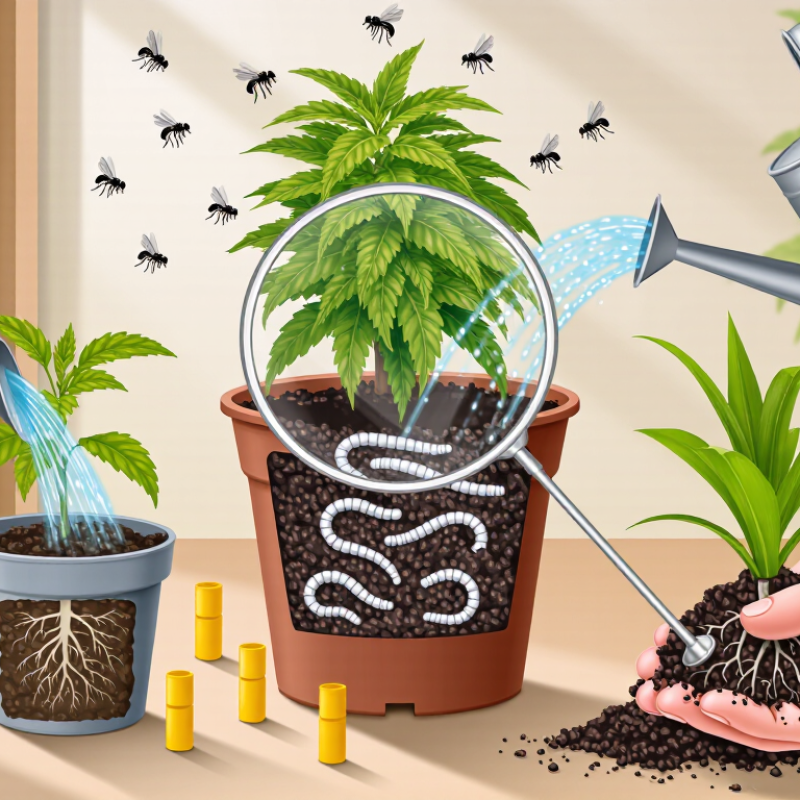
Fungus gnats are small, dark flies often seen circling houseplants. Their adults are annoying, but larvae cause the greater concern. Females lay eggs in damp potting soil, especially where decaying leaves and algae remain. The eggs hatch within several days. Larvae then feed on fungi, organic matter, and sometimes tender roots. A few adults are harmless. A heavy infestation is different.
Their life cycle can finish in about three to four weeks indoors, depending on warmth and moisture. After the larval stage, they form pupae in the soil before emerging as adults. Sticky traps catch flying adults, but they do not remove hidden larvae or eggs. Let the upper soil surface dry between waterings, improve drainage, and remove fallen plant material. Do not keep the pot constantly wet.
Consistency matters more than one dramatic treatment. Use a soil treatment labeled for fungus gnat larvae, such as beneficial nematodes or a microbial larvicide, according to its directions. Repeat control measures after about seven days, because new adults may emerge. Isolate affected plants when possible. I once focused only on the visible flies and felt disappointed when they returned. The mistake was treating the symptom, not the life cycle. Check soil moisture, roots, and nearby pots every few days.
Fungus gnats typically develop through four stages in moist plant soil. At around 24°C (75°F), eggs hatch in approximately 3–6 days, larvae feed in the soil for about 8–20 days, pupae develop for roughly 4–6 days, and adults commonly live for 7–10 days. Reducing excess moisture can help interrupt the soil-based stages.
Confirming an Infestation in Plant Soil
Before treating fungus gnats, confirm the problem. I once blamed tiny flies on fungus gnats, but they were harmless moisture-loving insects. Real fungus gnats often rise from the pot after watering. Adults have slender black bodies, clear wings, and long legs. Their larvae are harder to spot. Look for glassy, thread-like bodies near the upper soil layer, especially around damaged roots.
Use a yellow sticky card beside the plant for three days. Several trapped adults suggest an active population, not a random visitor. Gently remove the top two centimeters of soil and inspect it with a hand lens. Wilting seedlings, slow growth, and root scarring strengthen the diagnosis, but these symptoms can have other causes. Do not rely on symptoms alone.
Tip: Let the surface dry slightly, then check whether new adults appear after watering. Moist soil is the key clue. UC Integrated Pest Management reports that females can lay roughly 100–300 eggs, so a small adult count may hide a larger larval population. Oregon State University Extension also identifies persistent moisture as a major risk factor in container media. My inspection can still be imperfect; pale larvae are easy to miss. Repeat the check after five to seven days. If sticky cards remain empty and larvae are absent, the plant may have a watering or root-health problem instead.
Fungus gnats often reveal themselves as tiny black insects rising from the soil after watering. Adult gnats rarely damage healthy leaves, but females can lay eggs in damp, organic potting mix. I place yellow sticky cards just above the soil to catch flying adults. Replace them when their surfaces become crowded. This reduces mating, but traps alone will not remove hidden larvae.
Let the top 2–3 centimeters of soil dry before watering again. Check the soil with a wooden stick, not only by touching the surface. Water deeply, then empty the saucer within a few minutes. Remove fallen leaves and moss, because decaying material gives eggs a suitable nursery. Bottom watering can help, but it should not leave the pot permanently wet. That mistake is easy to make.
For persistent infestations, beneficial microscopic nematodes or a biological larvicide containing Bacillus thuringiensis israelensis can target larvae in the soil. Follow the product label and keep treatment consistent across the full life cycle. Isolate affected plants for several weeks, and inspect nearby pots for adults. Fresh, clean potting mix helps when roots are severely infested. Still, repotting every plant is excessive and can stress healthy roots. The real control comes from breaking the moisture cycle before new eggs hatch.
Fungus gnats rarely disappear by trapping adults alone. The real target is their larvae, which feed in damp, organic-rich soil. Let the top 2–5 centimeters dry before watering again. Check the soil with your finger, not by following a fixed schedule. Small pots may dry quickly, while deep containers can stay wet for days.
Use yellow sticky cards to reduce egg-laying adults, but do not expect them to cure the infestation. For larvae, a biological treatment containing Bacillus thuringiensis israelensis can help when applied according to its label. Beneficial nematodes are another option for suitable indoor growing conditions. Apply them evenly through moist soil. They need moisture to work. Remove dead leaves, algae, and spilled potting mix from the surface. Improve drainage with a container that has open drainage holes. A coarse, airy growing medium can also reduce long-lasting moisture.
I once watered a plant every morning because its surface looked dry. That habit kept the lower soil wet and encouraged another outbreak. My mistake was trusting the surface alone. If the roots smell sour or the infestation remains severe, inspect the root ball and replace heavily contaminated mix with fresh, clean material. Wash the container before reuse. Keep new plants separate for two weeks. Complete control requires patience, because adult gnats may continue emerging for several days. Recheck the soil weekly.
| Tip | Main Target | Recommended Action | Useful Timing or Measurement | Why It Helps |
|---|---|---|---|---|
| 1. Let the soil surface dry | Eggs and larvae | Allow the upper layer of potting mix to dry before watering again, while avoiding prolonged drought stress for the plant. | Check moisture about 2–5 cm below the surface; watering frequency varies with plant, pot size, light, and temperature. | Fungus gnat larvae need moist organic material. Drier surface conditions make the soil less suitable for egg-laying and larval development. |
| 2. Improve drainage | Persistently wet soil | Use containers with drainage holes, empty standing water from saucers, and avoid compacted or waterlogged potting media. | Inspect drainage after every watering; water should be able to exit the container freely. | Better drainage reduces the consistently damp conditions that support fungal growth and gnat larvae. |
| 3. Remove decaying debris | Food sources and breeding sites | Remove fallen leaves, dead roots, algae, and other decomposing organic material from the soil surface. | Inspect the surface weekly and remove debris promptly. | Larvae feed on fungi, algae, and decaying organic matter, so sanitation reduces available resources. |
| 4. Use yellow sticky traps | Adult gnats | Place traps close to the soil surface and replace them when they become covered with insects or dust. | Check weekly; traps monitor adult activity but do not eliminate larvae in the soil. | Adults are attracted to yellow surfaces, allowing the traps to reduce flying adults and reveal whether activity is declining. |
| 5. Treat larvae with biological control | Larvae in potting media | Use a labeled biological treatment containing beneficial organisms intended for fungus gnat larvae, and follow the product label exactly. | Repeat only as directed; larval control commonly requires continued monitoring because eggs and pupae may remain. | Biological treatments can target immature stages that sticky traps cannot reach. |
| 6. Quarantine new plants | Reinfestation | Keep newly purchased or recently repotted plants separate and inspect their soil before placing them near other houseplants. | Monitor for at least 2–3 weeks, using a sticky trap if adult activity is suspected. | Fungus gnats can spread unnoticed in moist potting media, making prevention important after treatment. |
| 7. Continue monitoring through the life cycle | Eggs, larvae, pupae, and adults | Combine moisture management, sanitation, traps, and appropriate larval treatment instead of relying on one step alone. | Continue checks for several weeks after adult numbers fall; development is faster in warm, moist conditions. | Adult reduction alone may not end an infestation because immature stages can remain in the soil and emerge later. |
Key point: Long-term control depends on reducing excess moisture, removing organic debris, treating larvae when necessary, and preventing reinfestation. Results may take several weeks because fungus gnats develop through multiple life stages.
Fungus gnats rarely disappear forever after one treatment. Long-term prevention depends on making plant soil consistently less attractive to their larvae. These small flies prefer damp, organic-rich compost and shaded surfaces. Let the upper two or three centimeters of soil dry before watering again, but do not let sensitive plants wilt. I check moisture with a wooden stick because judging by surface color can be misleading.
My own mistake was watering on a fixed schedule during a cloudy week.
Use pots with open drainage holes, and empty saucers after watering. Remove fallen leaves and dead roots, where larvae may develop. A thin layer of coarse sand or fine gravel can keep the surface drier, although it is not a complete barrier. Keep new plants separate for two weeks. Inspect the soil and watch for adult flies before placing them near established plants.
Yellow sticky cards help reveal whether adults are returning, but they do not control larvae alone. Replace them when covered with insects or dust. If an infestation persists, apply a biological soil treatment containing suitable larva-targeting organisms, following the product label and local regulations. Repeat only as directed.
Some plants need evenly moist soil, so aggressive drying can damage roots. Healthy roots, clean tools, airflow, and careful watering create stronger protection over time. It is easy to overcorrect.
They are tiny black flies that rise from damp potting soil after watering. Adults rarely harm healthy leaves. Their larvae develop below the surface.
Place yellow sticky cards just above the soil. They catch flying adults and reveal whether numbers are increasing. Replace crowded or dusty cards. Traps alone cannot remove larvae.
Let the top 2–5 centimeters of soil dry before watering again. Check with a wooden stick or finger. Do not follow a fixed calendar. Small pots dry quickly, while deep containers may stay wet for days.
Watering every morning can leave lower soil permanently damp. I made that mistake when the surface looked dry. Check deeper soil instead. Water thoroughly, then empty the saucer within minutes.
Use containers with open drainage holes. Choose a coarse, airy growing medium when possible. Remove fallen leaves, algae, moss, and spilled potting mix. Keep the surface cleaner and drier.
Beneficial microscopic nematodes or suitable biological larval treatments can help. Apply them evenly through appropriately moist soil. Follow the product label carefully. Consistency matters across the insects’ life cycle.
No. Repotting healthy plants can stress their roots unnecessarily. Replace heavily contaminated soil when roots smell sour or infestations remain severe. Wash the container before reusing it.
Isolate affected plants for several weeks. Keep new plants separate for two weeks. Inspect nearby pots for adult flies and damp soil. Recheck conditions weekly.
Yes, aggressive drying can harm plants that need evenly moist soil. Adjust watering gradually. Healthy roots need moisture, but not stagnant wetness. This balance is easy to misjudge.
Monitor sticky cards, soil moisture, drainage, and plant debris regularly. Remove dead roots and fallen leaves promptly. Good airflow and careful watering reduce suitable breeding areas. Prevention takes patience.
Fungus gnats are tiny flying pests whose larvae develop in damp plant soil and feed on decaying material or delicate roots. To confirm an infestation, look for small black flies around the pot, larvae near the soil surface, or weakened plants with slow growth. The key to understanding How to get rid of fungus gnats in plant soil forever? is to target both adult insects and developing larvae instead of treating only what you can see.
Begin by removing visible adults and preventing them from laying new eggs. Allow the upper layer of soil to dry between waterings, improve drainage, and remove fallen leaves or other organic debris. Larvae can be reduced by replacing heavily affected soil, using clean containers, and applying a suitable soil treatment according to its instructions. Over time, maintain balanced watering, good airflow, and regular plant inspections. These habits make the growing environment less attractive to fungus gnats and help protect healthy roots for the long term.

Sativa Plant